Category A: Particle-migration-dominated mechanisms
-
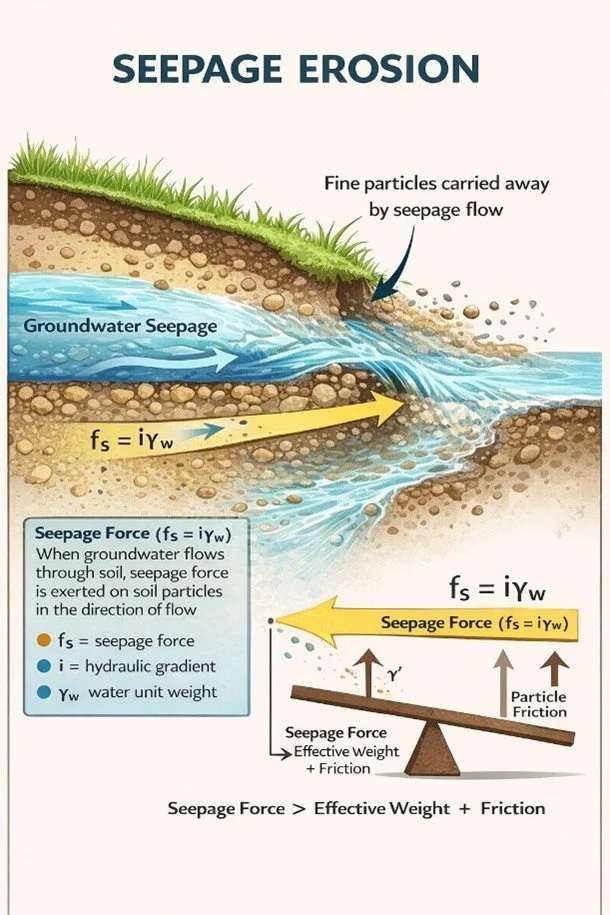
A1: Seepage erosion
When groundwater flows through soil, it generates a seepage force that can detach and transport particles if it exceeds gravitational and interparticle resistance.
-
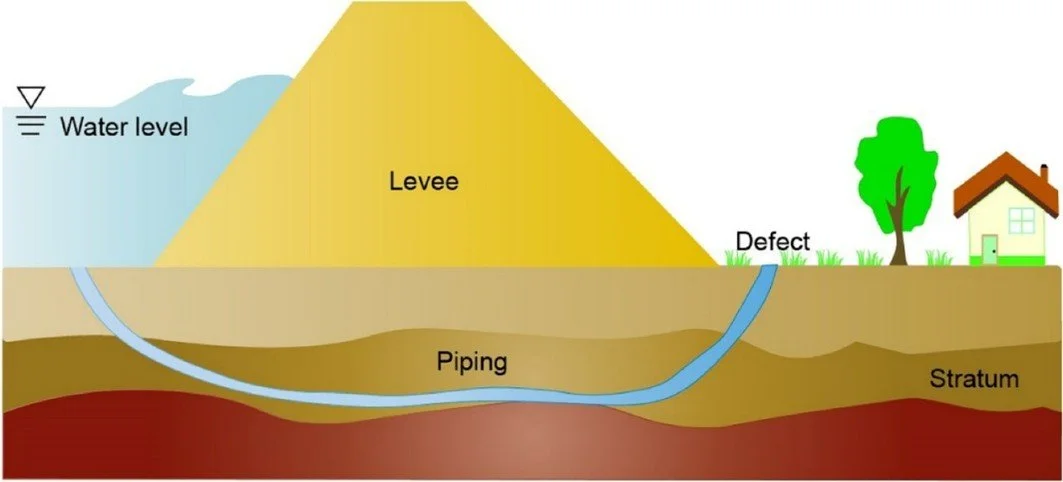
A2: Piping
It refers to a process in which seepage flow induces continuous particle migration, progressively forming a connected erosion channel (a “pipe”) inside the soil.
-
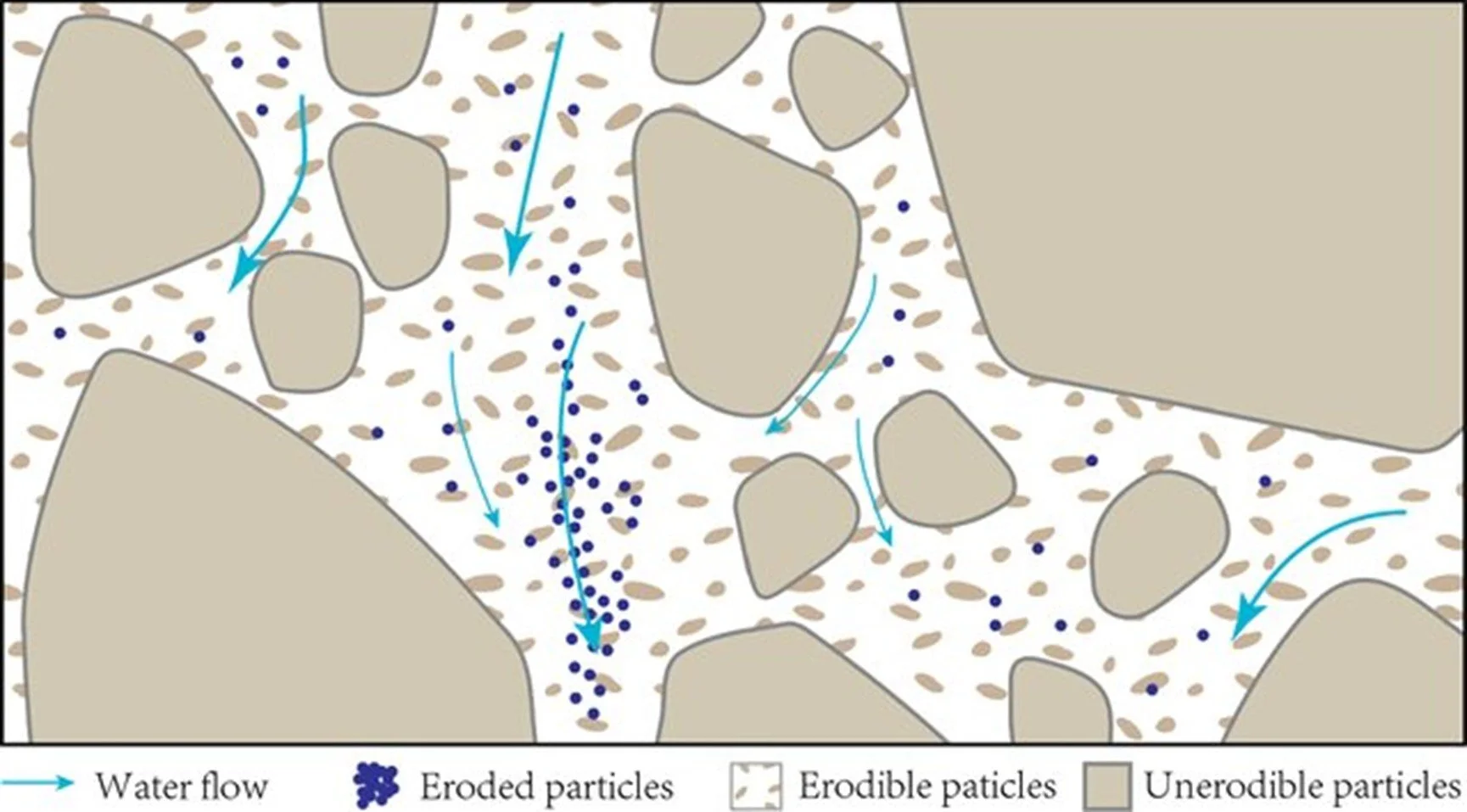
A3: Suffusion
Under seepage flow, fine particles are selectively transported through the pores of a coarse skeleton while the overall soil structure remains largely intact.
Category B: Stress-dominated mechanisms
-
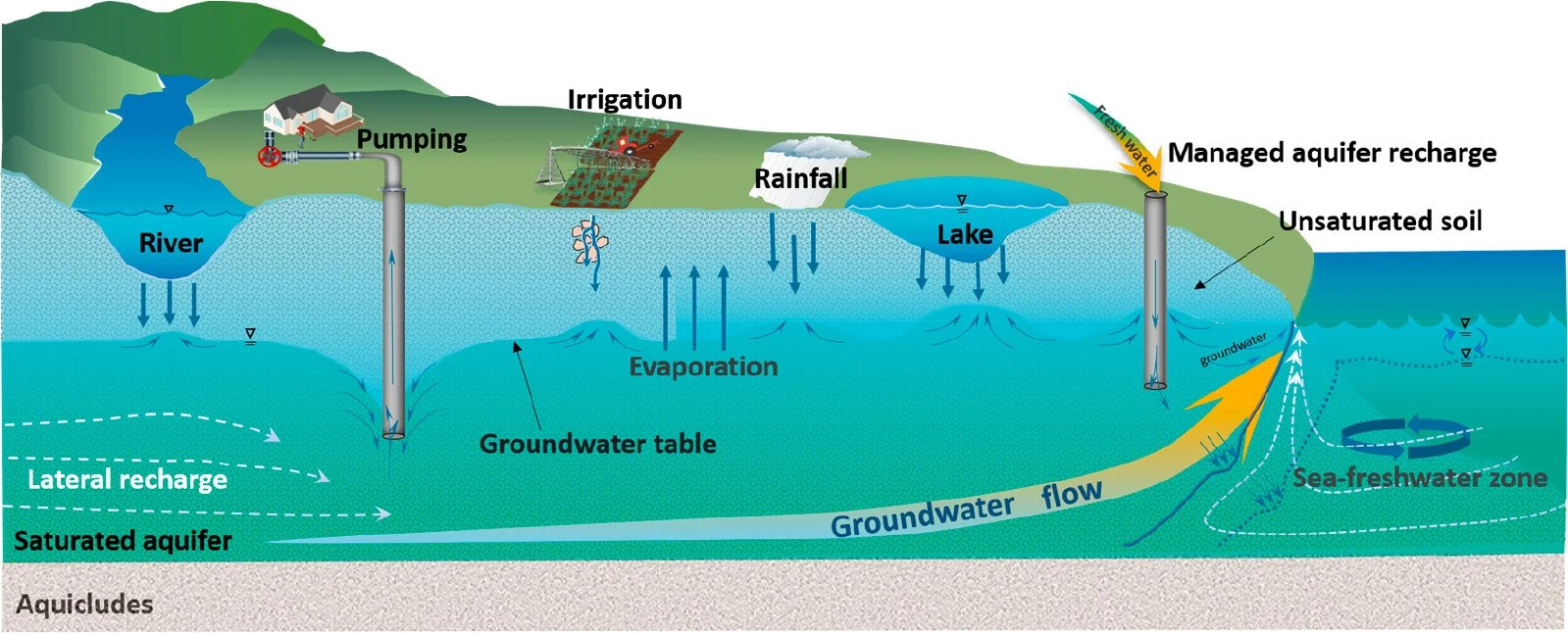
B1: Groundwater-induced weakening
This process does not involve seepage erosion or particle detachment. Instead, groundwater alters the stress state of the soil skeleton, thereby reducing soil strength.
-
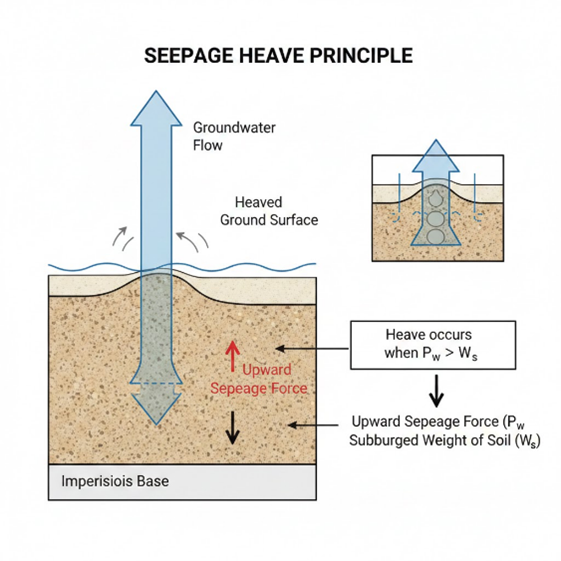
B2: Boiling / heave
Boiling refers to the condition in which soil particles begin to lose contact and become suspended, resembling a fluidized state.
Heave refers to the upward displacement or bulging of the ground surface due to hydraulic uplift.
A Combined Mechanism of Category A and Category B
-
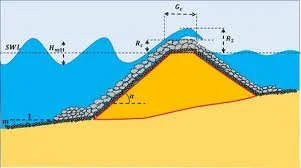
AB: Coupled erosion
In this type of process, groundwater does not directly transport particles. Instead, it reduces soil strength, which subsequently enhances surface erosion driven by flowing water.