Title: Numerical and laboratory investigation of boiling various sandy soils at downstream of hydraulic levees
Year: 2023
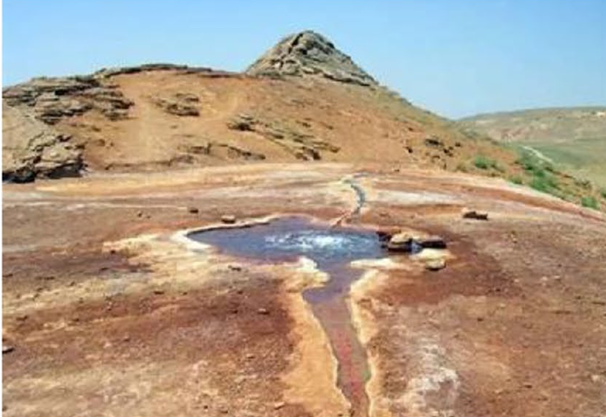
Content: Sand boiling is a dangerous phenomenon that can threaten earthen dams and embankments. This study investigated the heave potential downstream of an earthen dam using laboratory tests on two types of sand. Results show that higher uniformity coefficient (Cu) and relative compaction (Rc) increase the critical hydraulic gradient and improve resistance to sand boiling. Well-graded sands perform better against hydraulic failure and increase the safety factor against heave. In addition, adding geotextile reinforcement further enhances stability by increasing resistance to boiling.
Title: Effects of porous media thickness and its hydraulic gradient history on the formation of sand boils: Experimental investigation
Year: 2023
Content: Seepage beneath hydraulic structures occurs due to differences in upstream and downstream water levels and is critical for design. This study investigates the effects of soil anisotropy on seepage and uplift pressures using a two-dimensional steady-state groundwater flow model in Z-Soil. Both single-layer and two-layer soil systems were analyzed, considering permeability ratios, layer thickness, and heterogeneity. Results include uplift pressure distribution and downstream exit hydraulic gradient, presented in dimensionless graphs. The numerical results were verified using finite element analysis and conformal mapping methods, showing that the Z-Soil model effectively handles irregular site conditions.
Title: Experimental study on onset of nucleate boiling in narrow rectangular channel under static and heaving conditions
Year: 2012
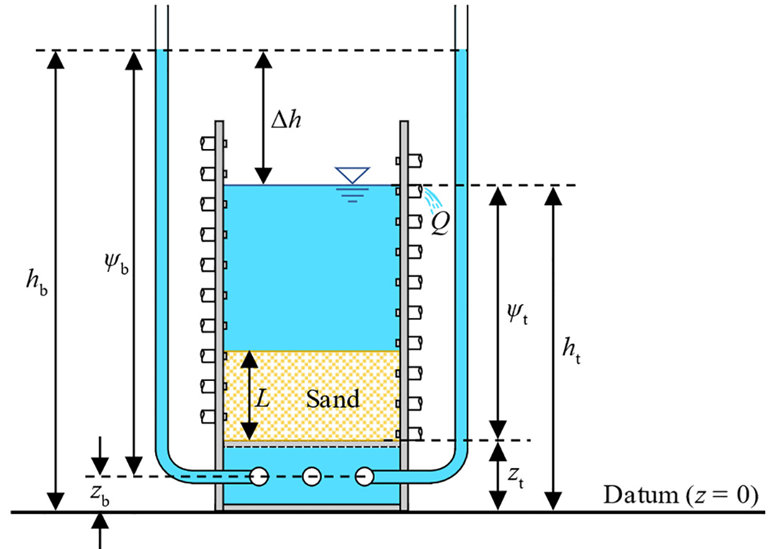
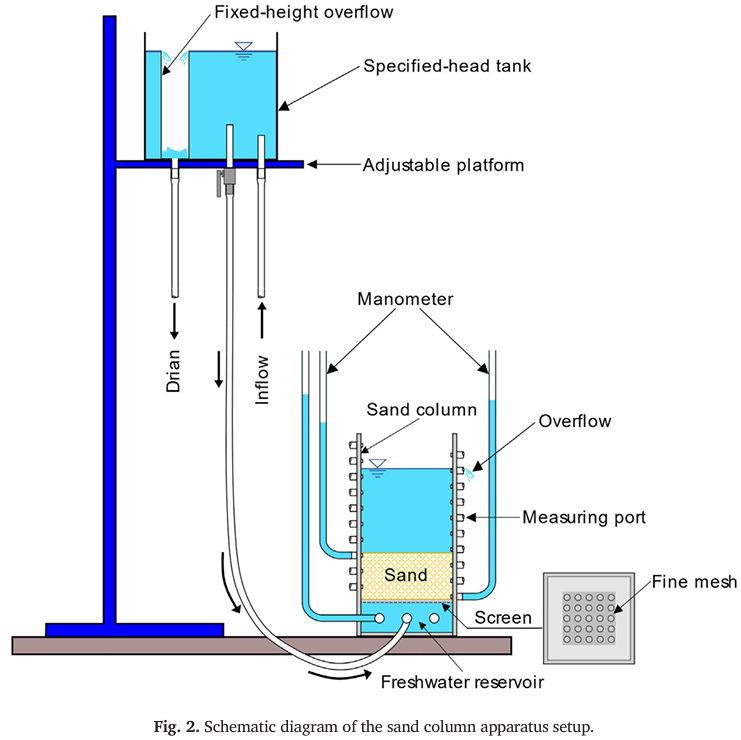
Content: Sand boils form when upward groundwater flow under high hydraulic gradients causes internal erosion and particle uplift. This study used laboratory experiments to examine how sand layer thickness and fluctuating hydraulic heads affect sand boil formation and reformation. Results show that the critical hydraulic gradient (icr) varies with sand thickness and can differ from Terzaghi’s theoretical value. In addition, the icr required for reformation of sand boils is significantly lower than that for initial formation, especially under oscillating pressures. The findings highlight the importance of sand depth and hydraulic history in predicting sand boil behavior.