Title: Water-Weakening Effects on the Mechanical Behavior of Different Rock Types: Phenomena and Mechanisms
Year: 2019
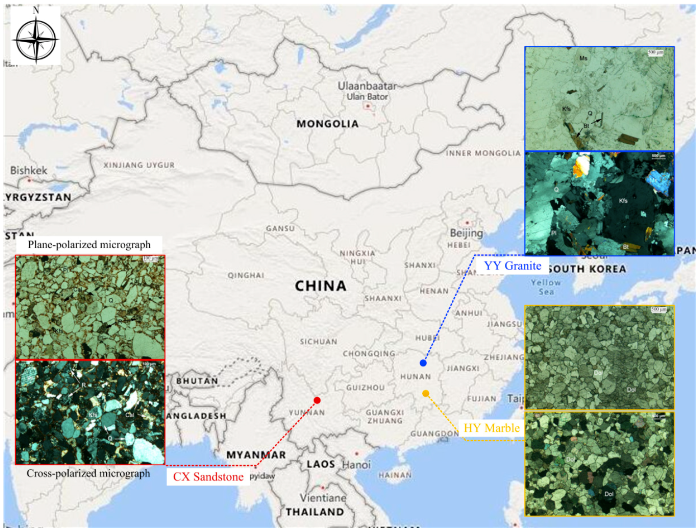
Content: Water significantly affects rock mechanical behavior and is closely related to geological hazards. Laboratory tests were conducted on sandstone, granite, and marble under dry and water-saturated conditions. The results show that water reduces uniaxial compressive strength, elastic modulus, and critical strain in all three rocks. Sandstone exhibits the greatest weakening, granite shows moderate reduction, and marble is least affected. The degree of weakening depends on porosity and mineral composition, particularly quartz and swelling clay content. In addition, water saturation shifts the failure mode of sandstone and granite from tensile to shear-dominant, while marble’s failure pattern remains unchanged.
Title: The water weakening effect on the progressive slope failure under excavation and rainfall condition
Year: 2023
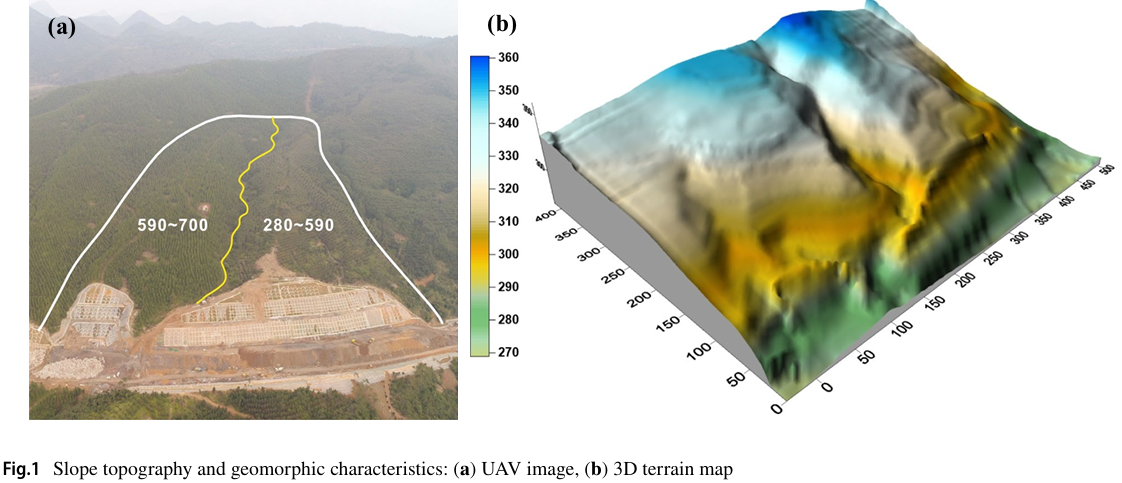
Content: Water weakening describes the gradual reduction of soil strength under long-term saturation. This study investigated how shale hydration affects slope stability during excavation and rainfall. Results showed that mechanical parameters decrease over time, leading to accelerating deformation and a continuous reduction in the safety factor. As hydration progresses, plastic zones develop and eventually connect from the rear to the front of the slope, triggering overall landslide failure. The findings indicate that conventional drainage and waterproofing measures may be insufficient, and slope stabilization must consider the coupled effects of stress, strain, and seepage.
Title: Analysis of Influence of Groundwater on Rock Mass Mechanics
Year: 2022
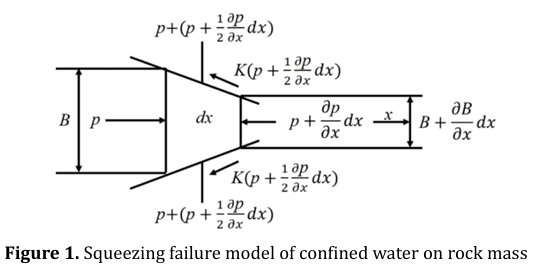
Content: Groundwater significantly deteriorates the mechanical properties of rock masses and is a major cause of geotechnical instability. Its influence can be categorized into physical, chemical, and mechanical effects. Mechanically, pore water pressure—both hydrostatic and dynamic—reduces shear strength by increasing effective stress reduction and generating tangential forces along structural planes. Physically, groundwater weakens rock through lubrication and softening, altering its mineral structure. Chemically, processes such as ion exchange and dissolution modify the rock’s microstructure, create secondary pores, and further reduce strength and stiffness.